
Coral Collection
Coral Collection
Beneath surface waves, marvel at the shimmering splendour of Shear Rocks’ Coral Collection. Spend as long as your like searching in the coral rich lagoons, and make sure you see the stingrays, but careful of the sharks…
What do coral reefs do for us? Not only do they store carbon, and quell dampen excess wave energy during tropical storms, they have infinite potential. They are home to millions of aquatic creatures which we still have to discover. Fungi, bacteria and microbes that dwell amongst corals, harbour an infinite array of potent chemical compounds still waiting to be discovered. It’s no wonder that the ancient greeks called them anti….. It is more important than ever, to protect them.
They sequester minerals from the ocean and build themselves structurally sound skeletons from calcium carbonate. On these structures, live soft bodies invertebrates, known as polyps.
Corals are architects of the underwater realm, blending hard and soft materials. Its soft bodied invertebrate, living part, its polyp, is a soft bodied, tentacled creature, which sequesters minerals from the seawater, making calcium carbonate, which it deposits, in layers, beneath it, gradually building its hard limestone skeleton over years. Microscopic algae live on corals, providing nutrients in return. It is these microscopic algae that give the corals their colour. However, when the seawater gets too warm, the corals expel the algae, through stress, and become white, in a process known as coral bleaching, and if they cannot stop being stressed, they die. Ocean acidification due to CO2 emissions alters the balance of chemicals in the waters and affects the coral and the creatures who feed on it. We can stop the negative impacts of ocean acidification if we reduce CO2 emissions.
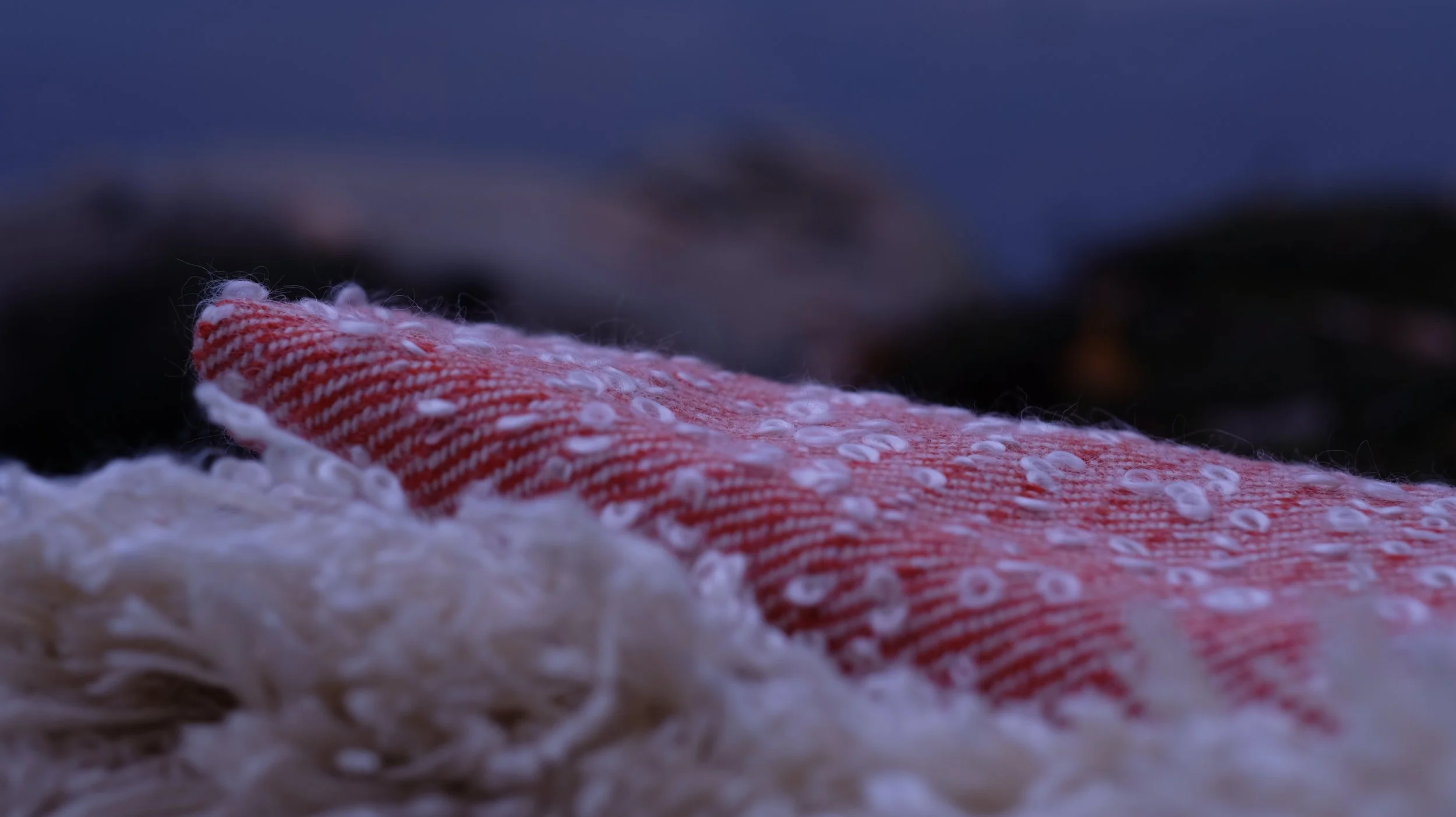
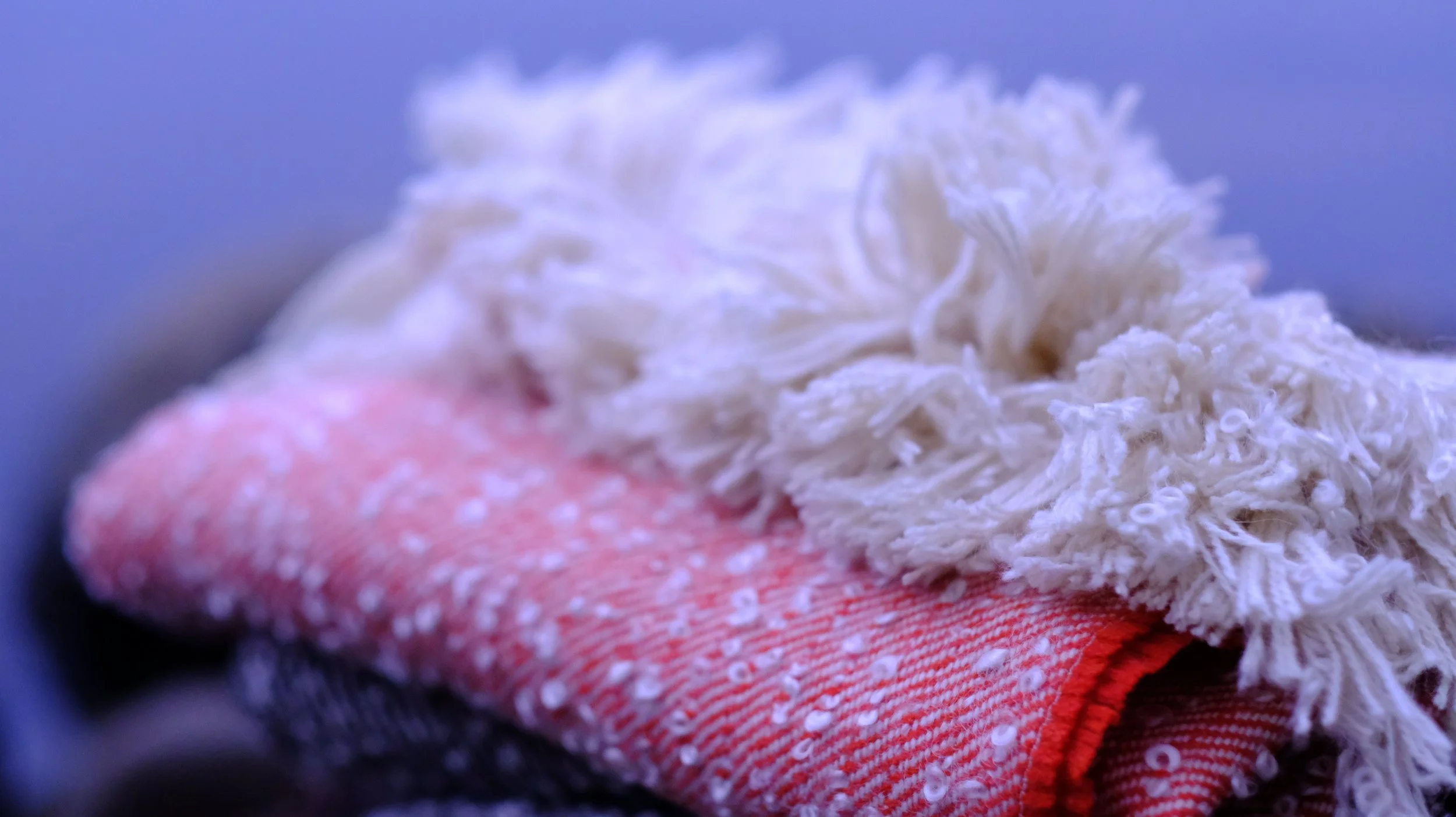
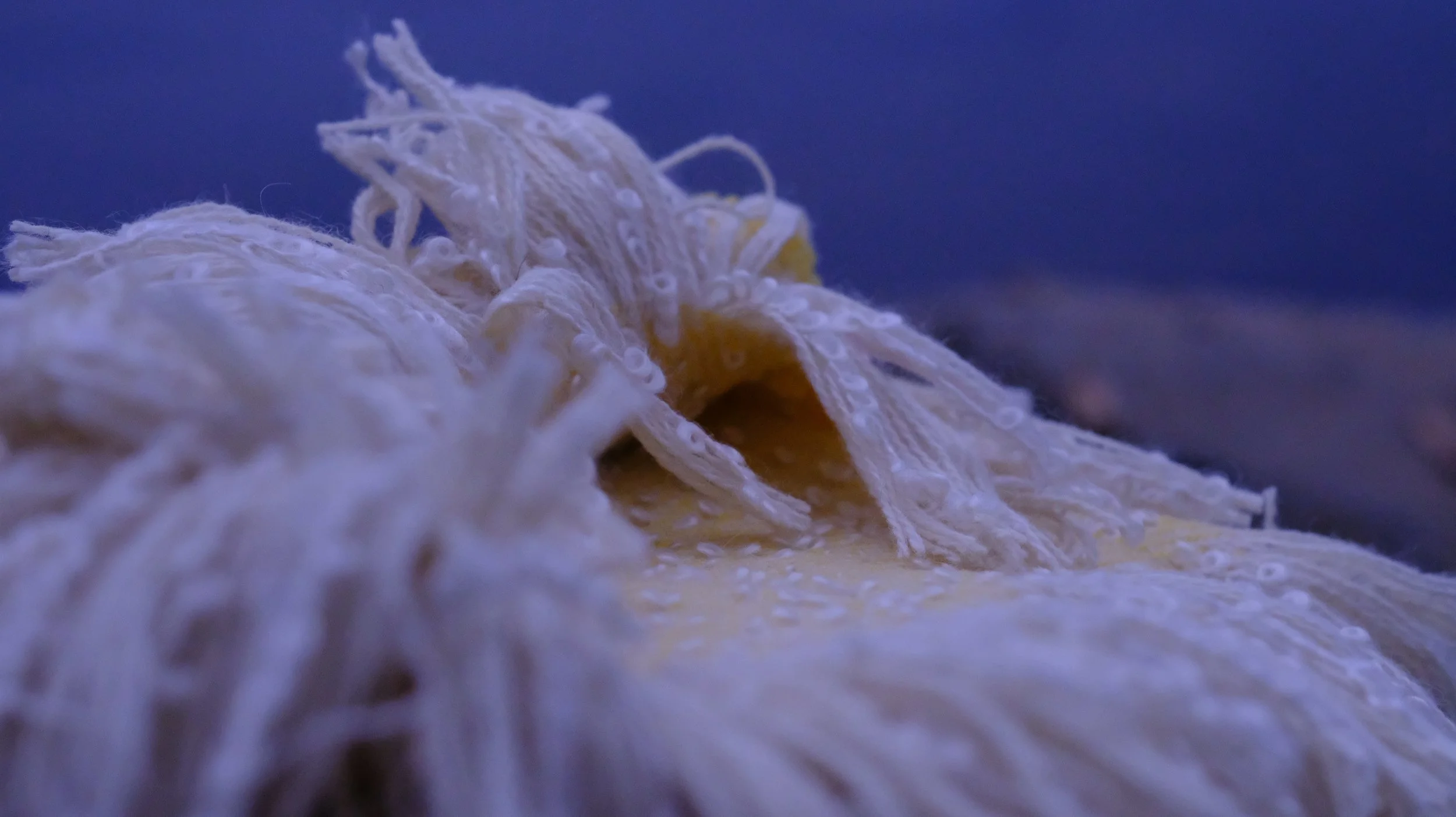
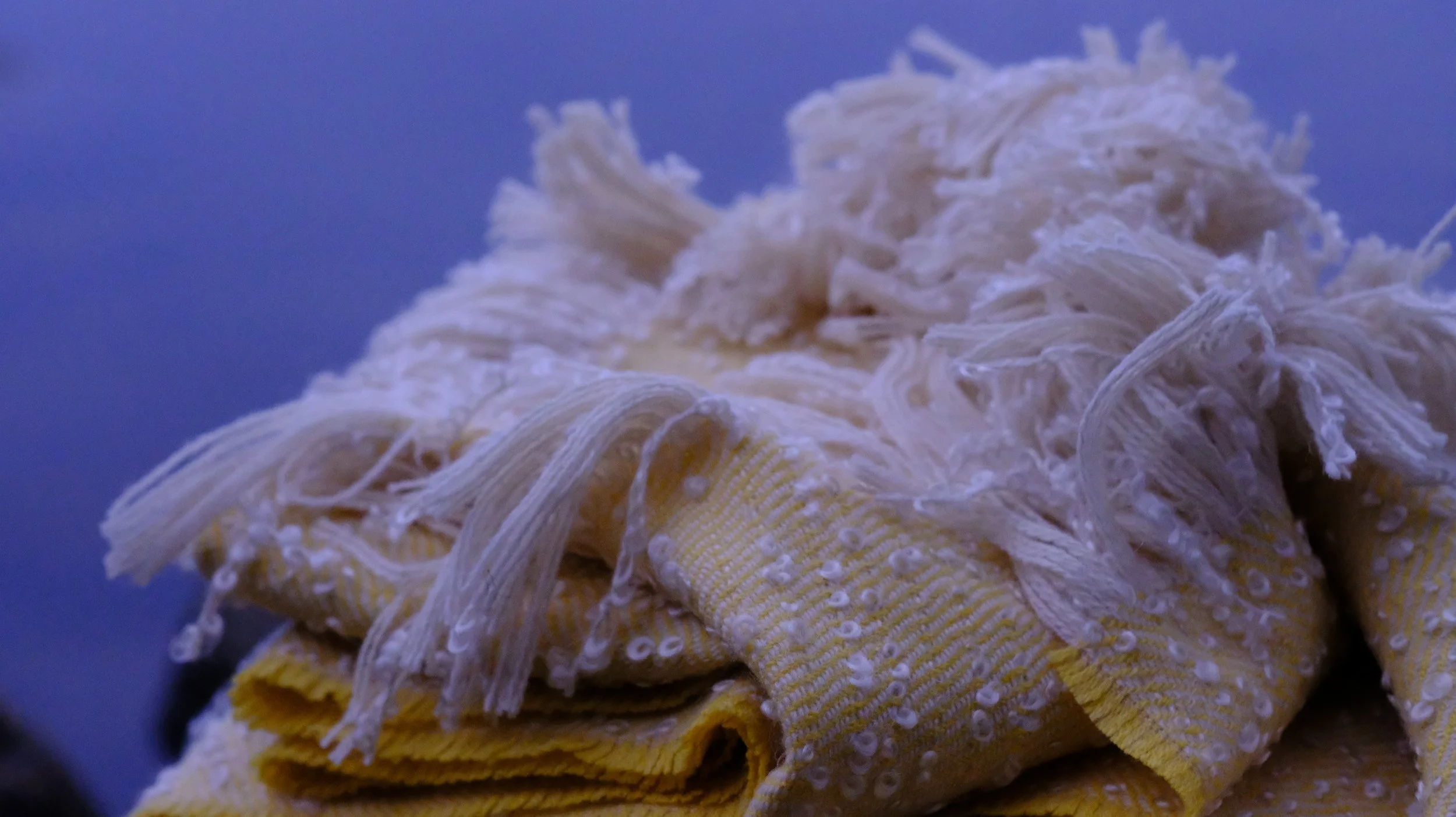
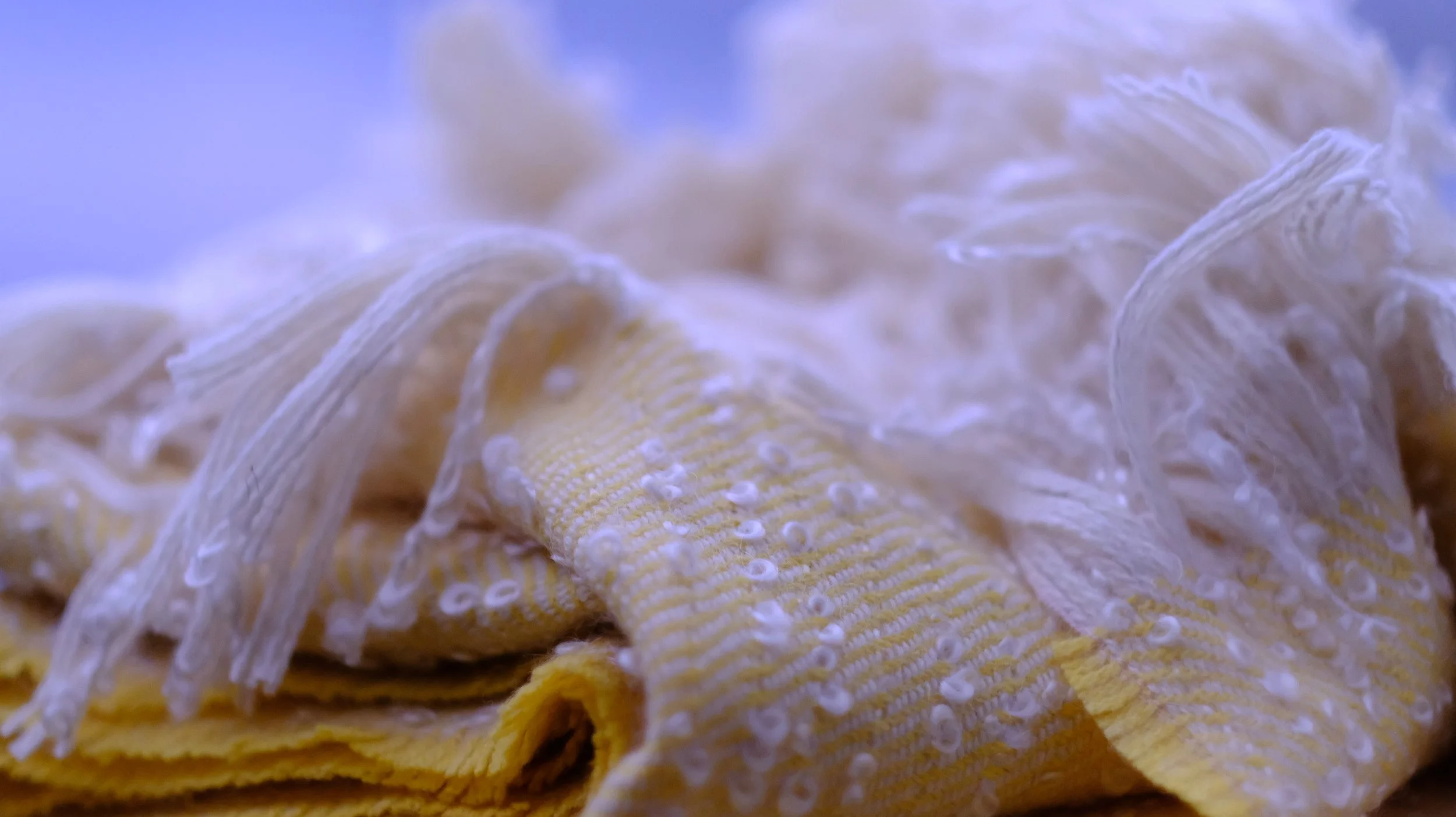
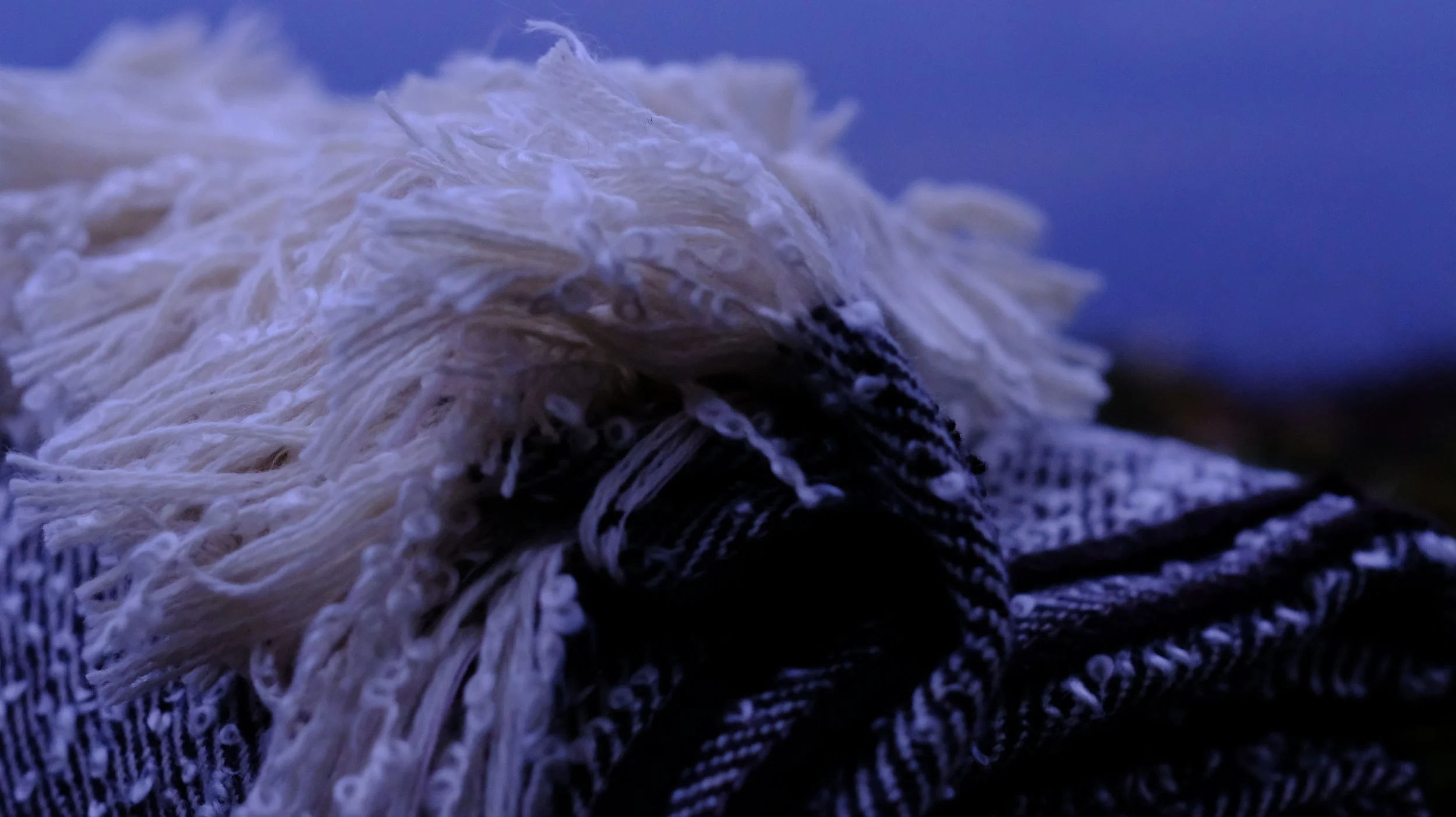
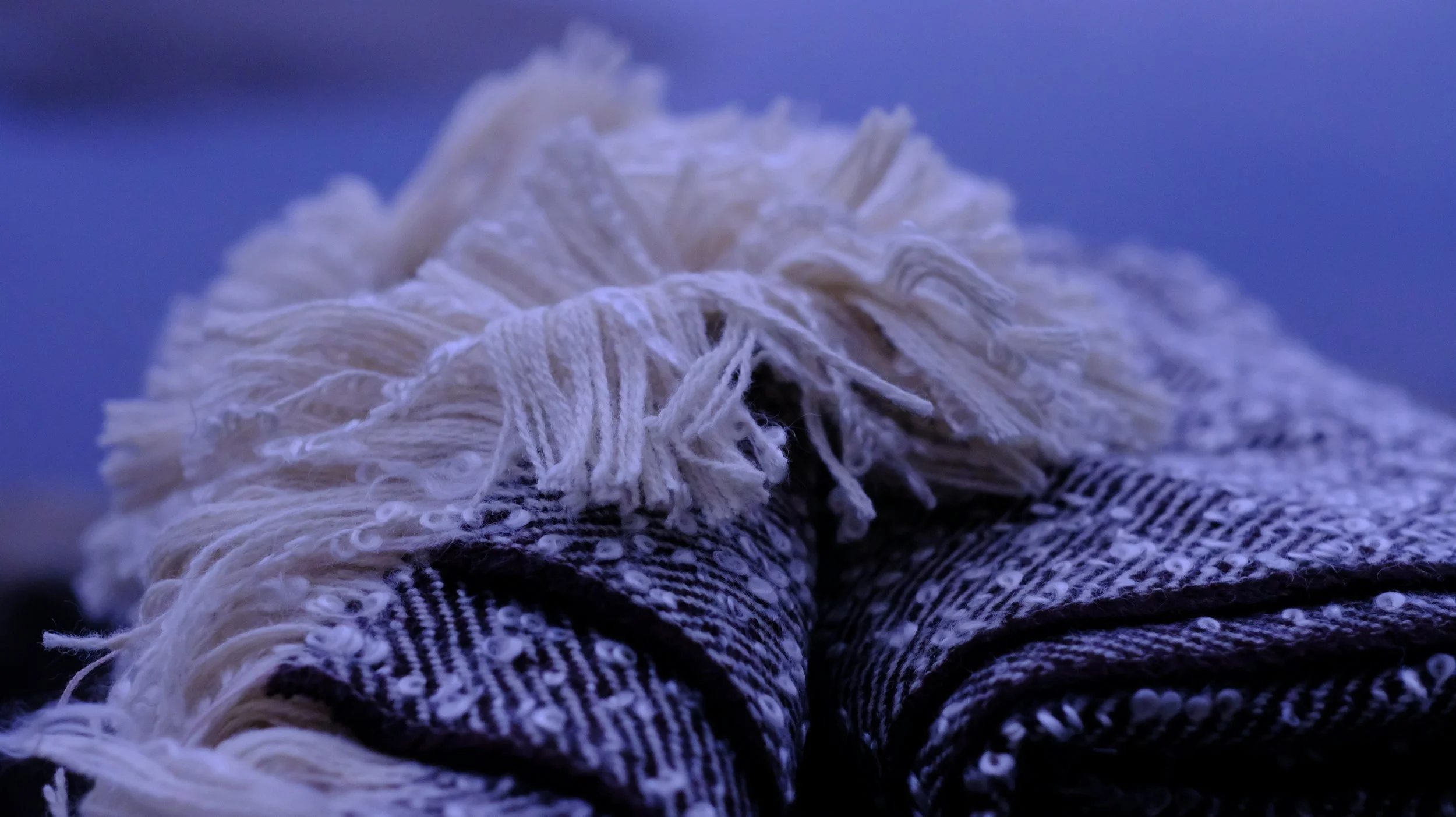
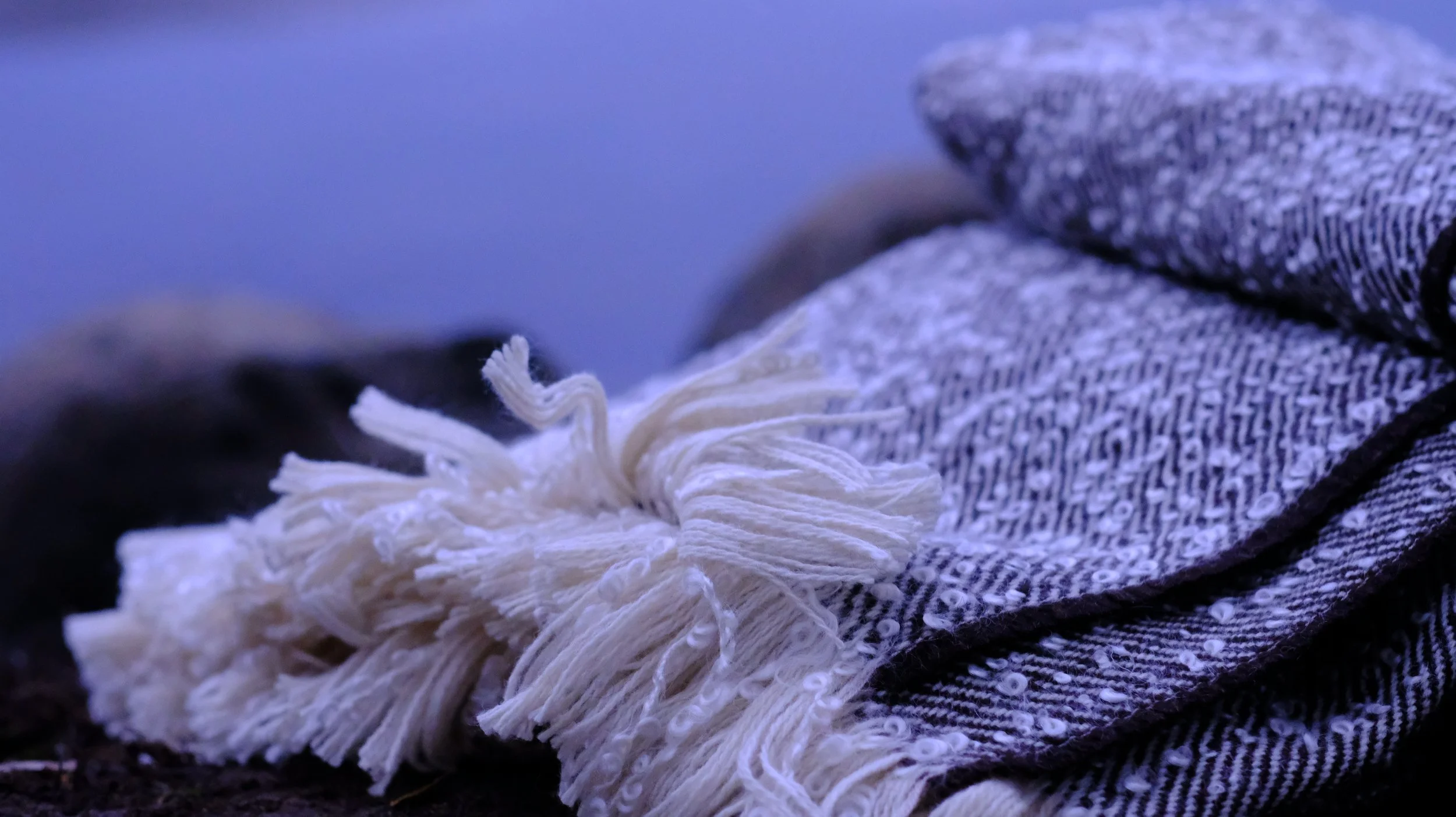
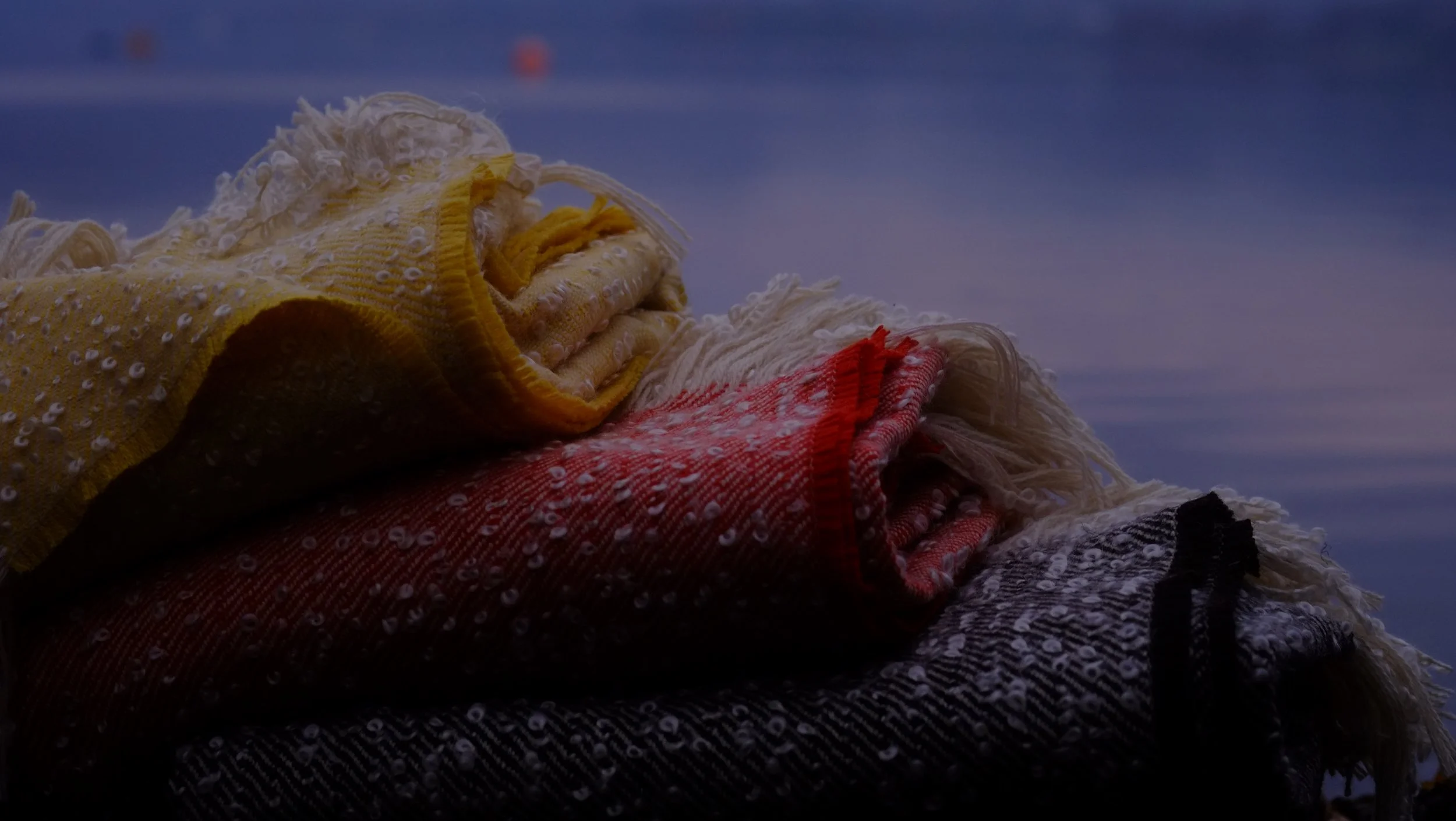
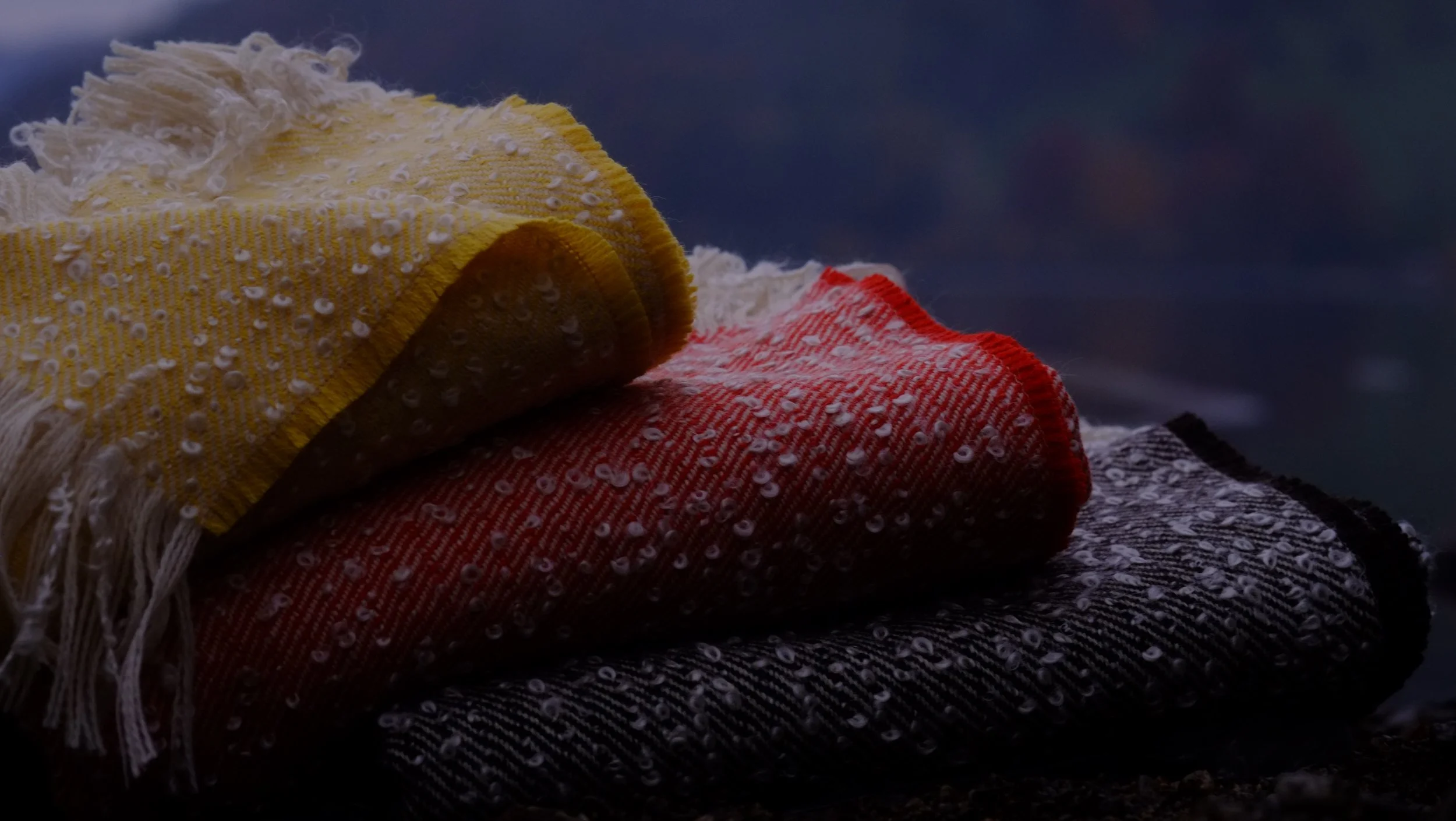
Through our Coral Collection, we want to bring you closer to these marine creatures. Our mohair loops, represent the soft polyps; our coloured and white twill, the gradually building, and layered limestone structure beneath.
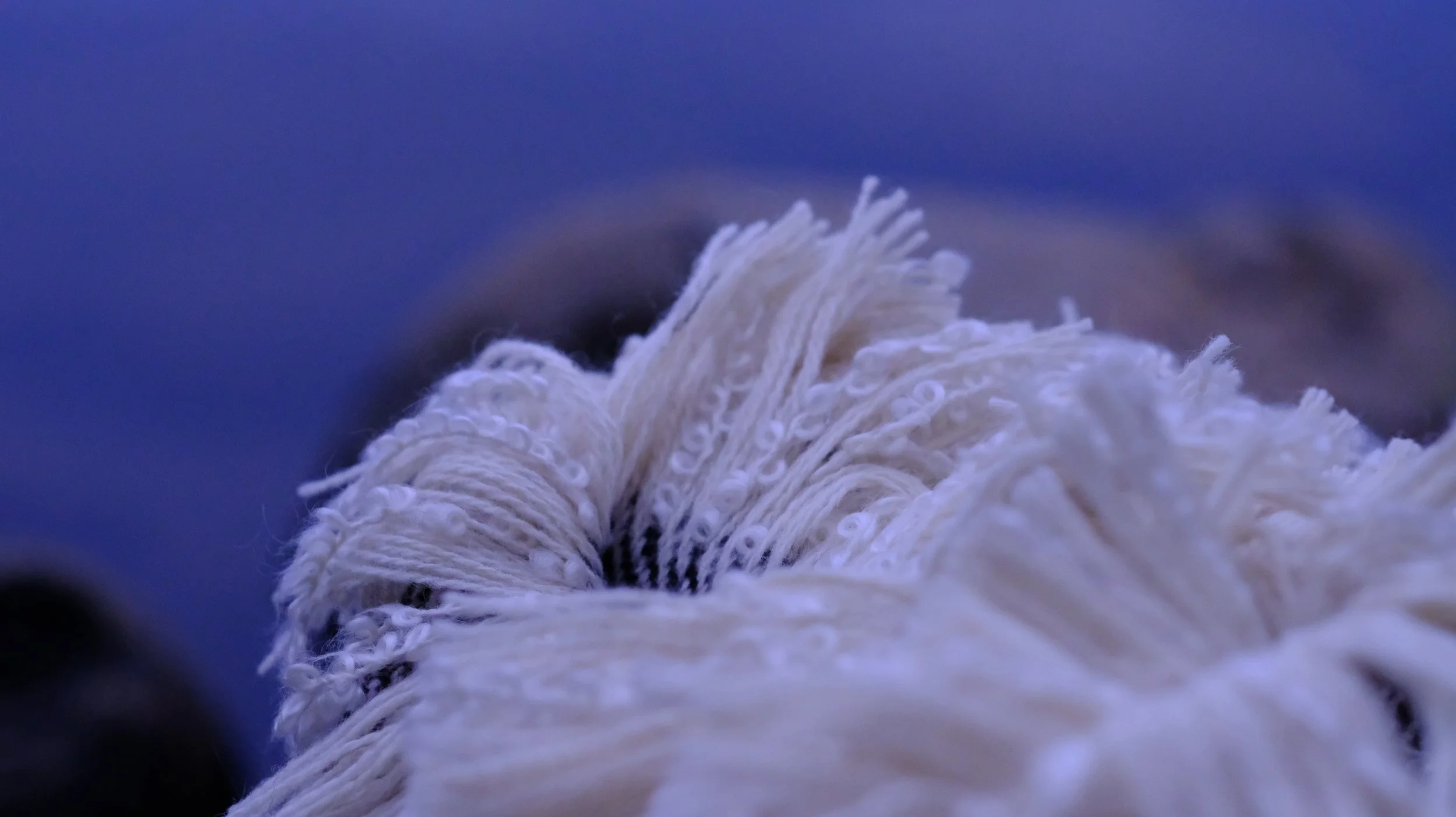
All of these throws feature a dense, ivory sea anemone-like fringing. Did you know that the clown fish can famously withstand the sting of the sea anemone? It is a specialist skill and in return for its precious real estate, they keep an eye on the coral, keeping it pristine.
Styles
Red coral = 100% pure new wool with mohair polyps.
Can be found in Mediterranean Sea. Atlantic and Italy and France and North Africa….
Golden Tree Coral = 100% pure new wool with mohair polyps.
Can be found in Pacific Ocean. Off Costa Rica, 360 to 529m below the surface....
Black coral = welsh black mountain sheep’s wool (British), cheviot wool with mohair polyps.
Black coral is named after the colour of its skeleton, which is dark brown, and often features white embellishments - more polyps - which grow upon its dark structure. Black corals live in constant darkness, found in abyssal depths of the ocean - the zone at 4,000 to 6,000 metres deep. It is believed to be the oldest coral on earth, and some samples have been radiocarbon-dated at over 4000 years old.
Ivory coral = cheviot wool (British) with mohair polyps.
Ivory bush coral can be discovered in shallower waters ,and in the deeper deaths, between 70 and 100m, and found in the western Atlantic Ocean, most notably, the Oculina Banks, where a reef of ivory bush coral, grows off the shores of Florida.
Dimensions:
190cm long including anemone fringes.
150cm wide.
Quisque iaculis facilisis lacinia. Mauris euismod pellentesque tellus sit amet mollis.